If you have started looking into how to get rid of dark spots on your face, you have probably come across two options that sound very similar: IPL (intense pulsed light) and laser. Both use light to break down pigment, both promise a more even complexion and both are offered by aesthetic clinics. So how do they differ, and which one is right for you?
The short answer is that it depends on two things: your skin type and the type of dark spot you have. In this article we explain how each technology works, when one is a better fit than the other and what results you can expect. If you are not yet sure what kind of pigmentation you have, start with our complete guide to removing dark spots on the face.
What is IPL and how does it treat dark spots?
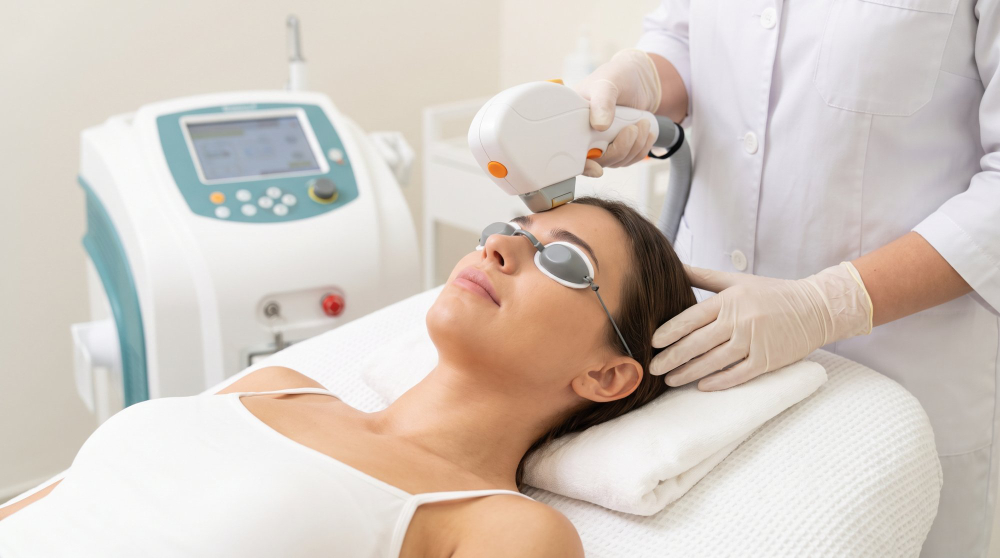
IPL, or intense pulsed light, is not actually a laser, although the two are often confused. It is a broad-spectrum light (roughly 500 to 1,200 nm) delivered in flashes through a handpiece. Filters select the part of the spectrum needed for each case, so the energy is absorbed by the pigment in the spot (melanin) or by haemoglobin in small blood vessels.
That is why IPL treatment works so well when the skin has sun spots, freckles and redness at the same time: it targets all of them in one session and also stimulates collagen. After treatment, the spots darken for a few days (often described as looking like coffee grounds) and flake off within 7 to 14 days, leaving brighter, more even skin. In English this is often called a «photofacial».
What is laser treatment for dark spots, and which types are there?
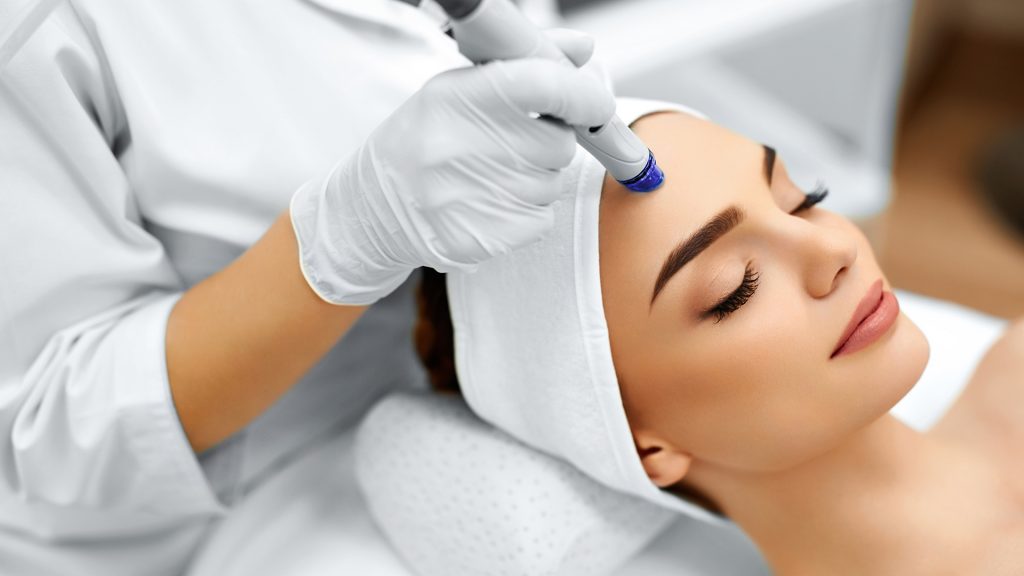
Laser treatment for dark spots uses light of a single wavelength, concentrated in a very precise beam. That precision allows a lot of energy to be delivered to one specific spot with little effect on the surrounding skin. There is no single «laser for pigmentation» but several families with different uses:
- Pigment lasers (Q-switched and picosecond): ultra-short pulses shatter pigment into tiny particles that the body clears. They are the benchmark for well-defined sun spots, some birthmarks and stubborn spots.
- 1064 nm Nd:YAG laser: this wavelength penetrates deeper and competes less with the melanin in the surrounding skin, making it one of the safest options for darker skin when used at low energy.
- Fractional CO2 laser (ablative): resurfaces the top layer of the skin. It treats pigmentation together with fine lines, texture and acne scars, but needs more recovery time.
- Non-ablative fractional lasers: heat micro-columns of skin without removing it. They improve tone and texture gradually, with less downtime than CO2.
IPL vs laser for dark spots: the key differences
Comparing IPL vs laser for dark spots really means comparing breadth with precision. IPL treats a wide area and several concerns at once; a laser goes straight to a specific target with more power. This table sums up the differences that matter most when deciding:
| IPL (intense pulsed light) | Pigment / fractional laser | |
| Type of light | Broad spectrum, filtered | Single wavelength |
| Precision | Treats wide areas overall | Very precise, spot by spot |
| Best for | Multiple sun spots, freckles, redness, sun damage | Isolated or stubborn spots; pigment + texture (CO2) |
| Skin types | Best on fair skin (I–III); with caution on IV | Depends on the laser; 1064 nm suits darker skin |
| Typical sessions | 3–5, every 3–4 weeks | 1–3 (pigment laser); 1–2 (CO2) |
| Discomfort | Warmth and a rubber-band snap | Similar; CO2 requires numbing cream |
| Downtime | Minimal: redness for 24–48 h and fine crusts | Minimal (pigment laser) to 5–10 days (CO2) |
| Cost per session | Usually lower | Usually higher |
IPL or laser by skin type
Your skin type is the factor that most influences the choice between IPL and laser. Doctors classify it using the Fitzpatrick scale, from type I (very fair skin that always burns) to type VI (very dark skin that never burns). The more melanin your skin has at baseline, the harder it is for the light to tell the spot apart from healthy skin, and the higher the risk of burns or lasting pigment changes.
That is why every treatment starts with a personalised skin diagnosis to establish your skin type. From there, the general guidance is as follows:
Skin types I to III: fair skin
This is the ideal scenario for IPL. The contrast between the spot and the skin is high, so the light finds its target easily. If there is also redness, visible capillaries or dull, sun-damaged skin, IPL gives an all-over rejuvenation that a pigment laser alone does not. Laser is kept for individual spots that do not respond.
Skin type IV: olive Mediterranean skin
This is one of the most common skin types we see on the Costa del Sol. IPL can be used with higher filters, conservative energy settings and a test patch first, always on untanned skin. For specific spots, a 1064 nm or picosecond laser usually offers a wider safety margin.
Skin types V and VI: dark skin
IPL is generally not recommended here. Low-energy 1064 nm lasers, gentle peels and topical lightening products are preferred, always with very cautious settings to avoid post-inflammatory hyperpigmentation.
Important for every skin type: tanned skin (including self-tan) is not treated. You need to wait around four weeks without sun exposure.
IPL or laser by type of dark spot
The type of dark spot is the second criterion when choosing between IPL and laser, and sometimes the deciding one. Not all brown marks are the same: some are superficial, some are deeper, and some get worse with heat. This is the usual guidance:
| Type of spot | Best option | Why |
| Multiple sun spots (solar lentigines) | IPL | Treats the whole area in a few sessions and evens overall tone |
| Single, well-defined or stubborn sun spot | Pigment laser | More energy and precision on one spot |
| Freckles | IPL | Respond very well; may return with sun exposure |
| Sun damage with spots and redness | IPL | Targets pigment and vessels at the same time |
| Spots with fine lines or uneven texture | Fractional CO2 laser | Resurfaces the skin and treats everything together |
| Melasma | Neither as first choice | Heat can cause a rebound; topical treatment comes first |
| Post-inflammatory marks (acne) | Gentle treatments | Inflamed skin pigments easily |
One important warning: any new spot, or one that changes shape or colour, must be checked before treatment. A dermatoscope examination rules out a lesion that needs a different approach. Light or laser should never be applied to a spot without a diagnosis.
How many sessions do you need and what results can you expect?
The number of IPL or laser sessions you need depends on how deep the pigmentation is and on the technology used. As a guide:
- IPL: 3 to 5 sessions, 3 to 4 weeks apart. Improvement is visible from the first session and builds gradually.
- Pigment laser: many sun spots clear in 1 to 3 sessions, 4 to 8 weeks apart.
- Fractional CO2 laser: usually 1 or 2 sessions, with 5 to 10 days of social downtime (redness and peeling).
In every case, treated spots do not usually come back, but your skin is still exposed to the sun and can form new ones. For spot-prone skin we recommend one maintenance session a year.
Before and aftercare: what makes the biggest difference
Before and aftercare for IPL or laser treatment of dark spots matters as much as the technology itself. Well-prepared skin responds better and has a lower risk of side effects:
- Before: avoid sun and self-tan for four weeks, tell us about any photosensitising medication and pause retinoids or exfoliants for the days we advise.
- After: SPF 50 every day, reapplied; do not pick the crusts; use gentle moisturiser and avoid saunas, intense exercise and heat for 48 hours.
- Maintenance: a HydraFacial with brightening actives between sessions or as maintenance helps keep the skin radiant and even.
How we choose between IPL and laser at Dr. Brianda’s clinic
Choosing between IPL and laser is a medical decision, not a menu choice. At your consultation, Dr. Brianda Hurtado de Mendoza carries out a full personalised skin diagnosis: skin type, type and depth of each spot, dermatoscope examination, sun exposure history, pregnancy or hormonal treatment, and how much downtime you can manage.
With that information we design a tailored plan, which may combine several techniques. For example, IPL to even out tone and treat redness, a more targeted treatment for a spot that does not respond, and home lightening products to maintain the result. Explore all our aesthetic medicine treatments or book at our Málaga clinic or our Marbella clinic, where we see international patients in English.
IPL vs laser for dark spots: frequently asked questions
These are the questions about IPL vs laser for dark spots that we hear most often in clinic. If yours is not here, we will answer it at your assessment.
Is IPL or laser better for dark spots on the face?
It depends on the type of spot and your skin type. IPL is usually the better choice for multiple sun spots, freckles and redness on fair skin. A pigment laser is more precise for isolated, well-defined or stubborn spots, and some lasers are safer on darker skin.
Does IPL work for melasma?
It is not usually the first choice. Melasma is a hormone-driven pigmentation that is very sensitive to heat and light, and IPL or aggressive lasers can make it worse through a rebound effect. It is treated first with sun protection and lightening products, and only in selected cases with low-energy light-based treatments.
Can I have IPL if I have olive or darker skin?
On skin type IV it can be done with conservative settings and never on tanned skin. On skin types V and VI, IPL is generally not recommended because of the risk of burns and lasting pigment changes; 1064 nm lasers at low energy or other alternatives are considered instead.
How many IPL sessions do I need for sun spots?
Most patients need 3 to 5 sessions spaced 3 to 4 weeks apart. Many sun spots lighten after the first session: they darken first and flake off as a very fine crust within 7 to 14 days.
Do dark spots come back after treatment?
Treated spots do not usually return, but the skin can form new spots with sun exposure. That is why daily sunscreen and an annual maintenance session for spot-prone skin are key to keeping the result.
What is the best time of year to treat dark spots?
Autumn and winter, when sun exposure is lower and it is easier to avoid a tan. On the Costa del Sol the sun is strong almost all year round, so SPF 50 remains essential in the cooler months too.
Conclusion: IPL or laser, diagnosis comes first
In short, there is no outright winner in the IPL vs laser debate for dark spots. IPL is the most complete option for fair skin with scattered sun spots, freckles and redness. Laser is more precise for isolated or stubborn spots and offers a wider safety margin on darker skin. Melasma, meanwhile, needs its own approach.
What really makes the difference is choosing according to your skin and your pigmentation, not the latest trend. Book your personalised skin diagnosis with Dr. Brianda and leave knowing exactly which treatment is right for you.