Finding more hair than usual on your brush, your pillow or in the shower drain is unsettling, and many women deal with it quietly. Hair loss in women is far more common than most people think and, more importantly, far more treatable, as long as the underlying cause is correctly identified.
In this guide, plastic surgeon Dr. Brianda Hurtado de Mendoza explains why hair falls out, when it is time to worry, how female hair loss is diagnosed and which female hair loss treatment makes sense in each case, from minoxidil to regenerative options such as PRP (platelet-rich plasma), polynucleotides and exosomes.
| Key takeaways
• Losing 50 to 100 hairs a day is normal and part of the natural hair cycle. • The two most common causes of hair loss in women are female pattern hair loss and telogen effluvium. • Treatment depends on the cause: without a proper diagnosis, any treatment is a gamble. • Minoxidil and correcting deficiencies are the foundation; PRP, polynucleotides and exosomes boost and complement them. • Results are assessed after 3–6 months of consistent treatment. |
How much hair loss is normal per day?
Knowing how much hair loss is normal per day is the first step to telling everyday shedding apart from a problem that needs treatment. Each hair goes through a three-phase cycle: a growth phase (anagen) lasting 2 to 7 years, a short transition phase (catagen) of a few weeks and a resting phase (telogen) of around 3 months, after which the hair is shed to make way for a new one.
That is why losing 50 to 100 hairs a day is completely normal, and slightly more on wash days or in autumn, when many people notice seasonal shedding. It becomes a concern when shedding is heavier and persistent, or when the hair growing back is noticeably finer.
See a doctor if you notice any of these signs:
- Heavy shedding lasting more than 2–3 months.
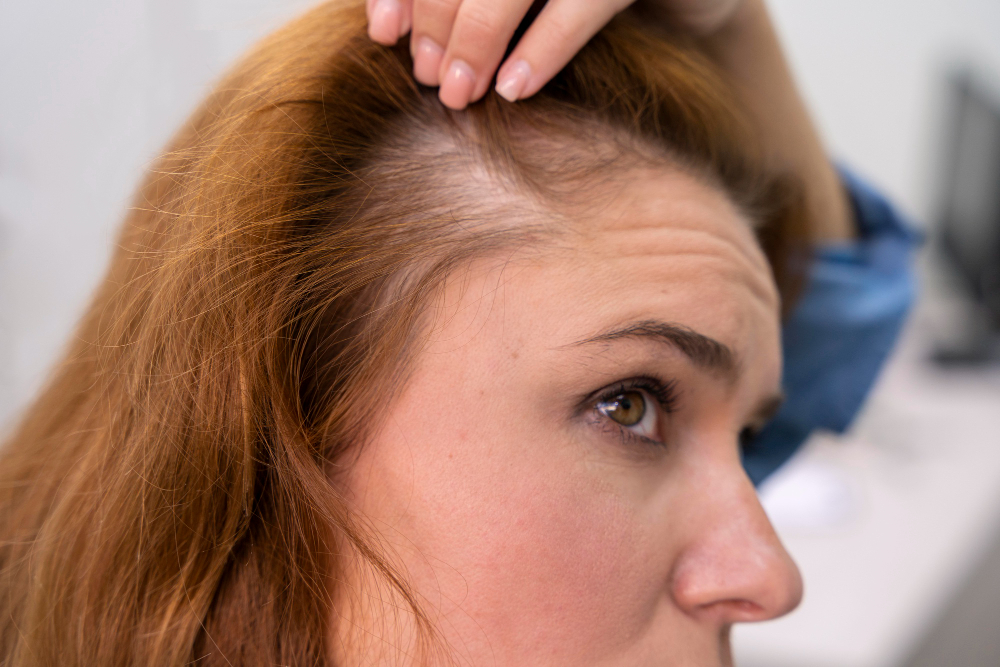
- A wider parting or a see-through crown.
- A ponytail that is clearly thinner than a year ago.
- Round, completely bald patches.
- Itching, pain, flaking or redness of the scalp.
| Important: itching, pain or redness alongside hair loss can point to an inflammatory or scarring alopecia. In these cases the follicle can be permanently damaged, so prompt medical assessment is essential. |
Causes of hair loss in women
The causes of hair loss in women are varied and often overlap: a genetic predisposition may only become visible after pregnancy, a strict diet or a stressful period. Identifying the main driver is what determines the right treatment.
Female pattern hair loss
This is the most common cause of chronic thinning in women. It has a genetic and hormonal component: hair follicles gradually shrink (miniaturise) and produce finer, shorter hairs until some stop growing altogether.
Unlike male pattern baldness, women rarely develop a receding hairline. The typical sign is diffuse thinning on top of the head, with a widening parting and the front hairline preserved. It is progressive, but the earlier it is treated, the more hair is preserved.
Telogen effluvium: shedding after stress, dieting or illness
Telogen effluvium is a sudden, diffuse shedding that appears 2 to 3 months after a trigger: a high fever, surgery, a crash diet, a period of intense stress, or starting or stopping certain medications. Many follicles enter the resting phase at once and fall out together weeks later.
The good news is that the follicle is not damaged: once the trigger is resolved, shedding usually settles within a few months and the hair grows back. When it lasts longer than 6 months, it is called chronic telogen effluvium and needs a more thorough work-up.
Postpartum hair loss
During pregnancy, oestrogen prolongs the growth phase and many women enjoy thicker hair. After giving birth, those hairs enter the resting phase together and shed heavily, usually peaking around 3–4 months postpartum.
It is a form of telogen effluvium and, in most cases, resolves on its own within 6–12 months. If density does not recover after that, it is worth ruling out iron deficiency, postpartum thyroid problems or female pattern hair loss unmasked by the pregnancy.
Menopause and hormonal changes
Falling oestrogen levels during perimenopause and menopause leave follicles more exposed to androgens, so thinning and finer hair are common at this stage of life.
Other hormonal conditions, such as polycystic ovary syndrome (PCOS), can also contribute. They are usually accompanied by other signs, like acne, increased facial hair or irregular periods, which help guide the diagnosis.
Iron deficiency, thyroid problems and other medical causes
Iron deficiency (low ferritin) is one of the most common and most overlooked causes of hair loss in women of reproductive age, especially with heavy periods or diets low in animal protein. Thyroid disorders, whether overactive or underactive, and low vitamin D can also play a role.
Certain medications and systemic illnesses are another factor to review, which is why blood tests are an essential part of any hair loss assessment.
Alopecia areata, traction alopecia and scarring alopecias
Alopecia areata is an autoimmune condition that causes round bald patches that appear quickly. Traction alopecia results from tight hairstyles worn for years (ponytails, braids, extensions) and mainly affects the hairline and temples.
Scarring alopecias, such as frontal fibrosing alopecia, which is more common after menopause, destroy the follicle and require early dermatological diagnosis and treatment to stop them progressing.
| Type of hair loss | What it looks like | Reversible? | First step |
| Female pattern hair loss | Finer hair, wider parting, thinning crown | Can be slowed and improved with ongoing treatment | Early diagnosis and treatment |
| Telogen effluvium | Sudden diffuse shedding 2–3 months after a trigger | Yes, in most cases | Identify and correct the trigger |
| Postpartum hair loss | Heavy shedding around 3–4 months after birth | Yes, usually within 6–12 months | Blood tests if it does not improve |
| Iron or thyroid deficiency | Diffuse shedding, sometimes with tiredness | Yes, once corrected | Full blood panel |
| Alopecia areata | Round bald patches | Variable | Dermatology assessment |
| Scarring alopecia | Hair loss with itching, redness or shiny skin | Not in the affected area | Urgent dermatology assessment |
How female hair loss is diagnosed
Diagnosing female hair loss combines a detailed medical history, a scalp examination and, almost always, blood tests. It is the step that most influences the outcome, because treating shedding caused by low iron has nothing in common with treating female pattern hair loss.
A consultation usually includes:
- Medical history: when the shedding started, pregnancies, diets, stress, medication, menstrual changes and family history.
- Examination and pull test: helps estimate whether shedding is active and whether it affects the whole scalp or specific areas.
- Trichoscopy: a magnified scalp examination that shows follicle miniaturisation, inflammation or other characteristic patterns.
- Blood tests: full blood count, ferritin, thyroid function and vitamin D, plus hormone tests if there are signs of androgen excess.
- Biopsy: only in unclear cases or when a scarring alopecia is suspected.
Standardised photos at the start make it possible to compare progress objectively every few months, which matters because hair changes slowly and day-to-day perception is misleading.
| Good to know: some causes of hair loss need input from other specialists, such as dermatology or endocrinology. A good approach knows when to refer and how to coordinate care. |
The most effective female hair loss treatments
The most effective female hair loss treatment is the one that targets the specific cause and is kept up over time. In practice, the best results come from combining a medical foundation treatment with in-clinic regenerative therapies that improve the environment around the follicle.
1. Treat the underlying cause
Before anything else, any deficiencies shown in blood tests (iron, vitamin D) are corrected, thyroid or hormonal imbalances are addressed, and medications or habits that may be contributing are reviewed.
In telogen effluvium, this step alone can be enough for hair to recover. In female pattern hair loss, it is the foundation that helps every other treatment work better.
2. Minoxidil: the best-evidenced treatment
Minoxidil is the treatment with the strongest scientific support for female pattern hair loss. It prolongs the growth phase and increases hair thickness. It is applied to the scalp as a solution or foam and, in selected cases, taken orally at low doses, always under medical prescription and supervision.
It requires consistency: first results are assessed after 4–6 months and, if stopped, the benefit is gradually lost. Slightly increased shedding in the first few weeks is normal and shows that follicles are renewing their cycle.
3. Hormonal treatments
When there is a clear androgenic component, a doctor may consider anti-androgen medication. These are prescribed on an individual basis, require monitoring and are not compatible with pregnancy, so they are usually combined with contraception.
4. PRP and growth factors
Growth factor therapy is obtained from the patient’s own blood: after a simple blood draw, it is centrifuged to concentrate the platelets and then injected into the scalp. These growth factors stimulate the follicle, improve blood supply and help prolong the growth phase of the hair.
It is one of the most studied regenerative therapies for female pattern hair loss and chronic shedding. As it is autologous, the risk of allergic reaction is minimal. A typical protocol is one session a month for 3–4 months, followed by maintenance sessions.
5. Polynucleotides for hair
Polynucleotides are purified DNA fragments, usually of marine origin, injected into the scalp. They reduce inflammation, stimulate tissue repair and improve microcirculation around the follicle, creating a better environment for hair growth.
They work best in the early stages of thinning, while follicles are still active. The evidence for hair is more recent than for PRP, but published results are promising. They are not suitable for people with a fish allergy.
6. Exosomes
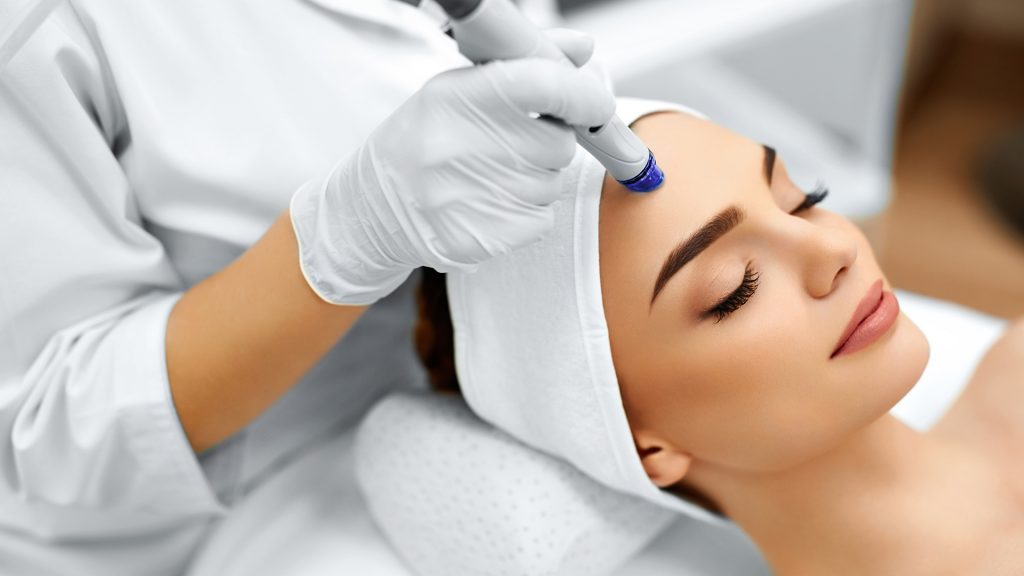
Exosomes for hair are vesicles packed with cell signals, applied to the scalp, usually with microneedling, to stimulate hair density. They are a cutting-edge option generally used within combined protocols.
Their evidence for hair loss is still developing, so they are best seen as a complement rather than a standalone treatment. For a deeper comparison, read our guide on the differences between exosomes and polynucleotides.
7. Hair transplant
In stable, localised female pattern hair loss with a good donor area, a hair transplant may be an option. It is less common in women than in men, because hair loss is usually diffuse and also affects the donor area, so candidates must be selected very carefully.
| Treatment | Best suited for | How it is given | When results show | Scientific evidence |
| Correcting deficiencies | Telogen effluvium, iron or thyroid deficiency | Supplements or medical treatment | 3–6 months | Strong if a deficiency is confirmed |
| Minoxidil | Female pattern hair loss | Daily topical or low-dose oral on prescription | 4–6 months | Strong |
| Anti-androgens | Hormone-driven hair loss | Oral, on prescription | 6–12 months | Moderate |
| PRP / growth factors | Female pattern hair loss, chronic shedding | Scalp injections | 3–4 months | Moderate |
| Polynucleotides | Early thinning | Scalp injections | 2–4 months | Promising, more recent |
| Exosomes | Add-on in combined protocols | Microneedling or injections | 2–4 months | Still developing |
Polynucleotides or PRP: which is better for hair loss?
Choosing between polynucleotides or PRP for hair loss depends on the type of hair loss, its stage and the patient’s preferences. They do not compete: they work through different mechanisms and are often combined in the same protocol.
As a general guide, PRP delivers direct stimulation to the follicle, while polynucleotides work on its environment: inflammation, hydration and scalp microcirculation.
| Feature | PRP / growth factors | Polynucleotides |
| Source | The patient’s own blood | Purified DNA of marine origin |
| Main mechanism | Direct follicle stimulation | Repairing and improving the follicle environment |
| Blood draw needed | Yes | No |
| Specific contraindication | Platelet or clotting disorders | Fish allergy |
| Ideal candidate | Female pattern hair loss and chronic shedding | Early thinning and an inflamed or sensitive scalp |
| Typical protocol | 3–4 monthly sessions plus maintenance | 3–4 sessions every 2–4 weeks plus maintenance |
Both work best alongside a medical foundation treatment. The exact combination and number of sessions are always tailored after an in-clinic assessment.
Habits that help reduce hair shedding
Some everyday habits help reduce hair shedding and make treatments more effective, although on their own they will not resolve established hair loss. The key is not to stress the follicle with deficiencies or repeated damage.
- Eat a varied diet with enough protein and iron, and avoid very restrictive diets.
- Avoid wearing tight hairstyles every day and reduce the use of straighteners and hairdryers on maximum heat.
- Don’t take “hair” supplements without blood tests first: without a deficiency they add nothing, and some, such as high-dose biotin, can interfere with certain lab results.
- Protect your sleep and find ways to manage ongoing stress.
- Stay consistent with your treatment plan: the hair cycle is slow, and changes are measured in months, not weeks.
Hair loss treatment in Marbella and Málaga with Dr. Brianda
Hair loss treatment at our clinics in Marbella and Málaga always starts by understanding what is happening in your specific case. Dr. Brianda Hurtado de Mendoza, a plastic surgeon with over 20 years of experience and international training, designs a personalised plan that combines, where appropriate, medical treatment with regenerative therapies such as PRP, polynucleotides or exosomes.
The process is straightforward: a scalp and medical history assessment, review or request of blood tests, a tailored protocol and follow-up with comparison photos every few months. We welcome international patients and, if your case needs input from another specialist, we will tell you from the very first visit.
If you would also like to improve the quality of your facial skin, which is often affected by the same hormonal changes, you can start with our free personalised skin diagnosis.
Frequently asked questions about hair loss in women
These are the questions about hair loss in women we hear most often in clinic. The answers are for guidance only and do not replace an individual medical assessment.
Can hair loss in women be treated?
In most cases, yes. Shedding caused by stress, pregnancy or deficiencies usually recovers fully once the cause is corrected. Female pattern hair loss cannot be cured, but early and consistent treatment can slow it down and restore some of the lost density.
When should I worry about hair loss?
If you are clearly losing more than 100 hairs a day for more than 2–3 months, if your parting looks wider or your ponytail thinner, if bald patches appear, or if shedding comes with itching, pain or redness of the scalp.
Does hair loss from stress grow back?
Yes. Stress-related shedding is usually telogen effluvium: it appears 2–3 months after the stressful event and, once that settles, hair grows back within a few months because the follicle is not damaged.
How long does postpartum hair loss last?
Postpartum shedding usually starts around the second or third month after birth, peaks at about 3–4 months and settles within 6–12 months. If density has not recovered by then, it is worth seeing a doctor.
How many PRP or polynucleotide sessions will I need?
As a guide, 3 to 4 initial sessions spaced 2 to 4 weeks apart, depending on the treatment, followed by maintenance sessions a few times a year. The exact protocol is set after your assessment.
Do vitamins help with hair loss?
Only if you have a deficiency. Correcting low ferritin or low vitamin D can reduce shedding, but taking supplements you don’t need adds no benefit and can skew blood test results.
Does minoxidil make hair fall out more at first?
It can during the first few weeks. This temporary shedding shows that follicles are renewing their cycle and is not a reason to stop treatment without talking to your doctor.
Will hair loss come back if I stop treatment?
With female pattern hair loss, yes: treatments slow the process only while they are maintained. With telogen effluvium, once the cause is corrected, long-term treatment is usually not needed.
Conclusion: hair loss in women can be treated
Hair loss in women almost always has an explanation and, in most cases, an effective treatment. The key is not to waste time on random products: a proper diagnosis lets you choose what actually works for your type of hair loss and start while the follicle can still respond.
| Noticing more hair loss? Book your hair assessment
Clinics in Marbella and Málaga · +34 638 327 138 · info@drabrianda.es |
This article is for information only and does not replace a consultation with a medical professional.