The upper arms are one of the areas where the passage of time, weight changes and loss of skin elasticity show up first. Patients often come to consultation with the same question: can this be fixed with a non-surgical treatment, or do I actually need surgery? The answer comes down to one specific factor: whether what’s left over is skin, fat, or both at once. In this guide we explain when radiofrequency and Morpheus8 are enough to restore firmness, and when a brachioplasty (arm lift) is the only realistic option to remove the excess skin.
Why Do Arms Become Saggy?
The skin on the inner arm is especially thin and has little underlying muscle support, which is why it’s often one of the first areas to lose firmness. The most common causes are age-related loss of collagen and elastin, cumulative sun exposure, genetic predisposition, significant weight changes (including weight loss after bariatric surgery), and hormonal changes linked to pregnancy or menopause.
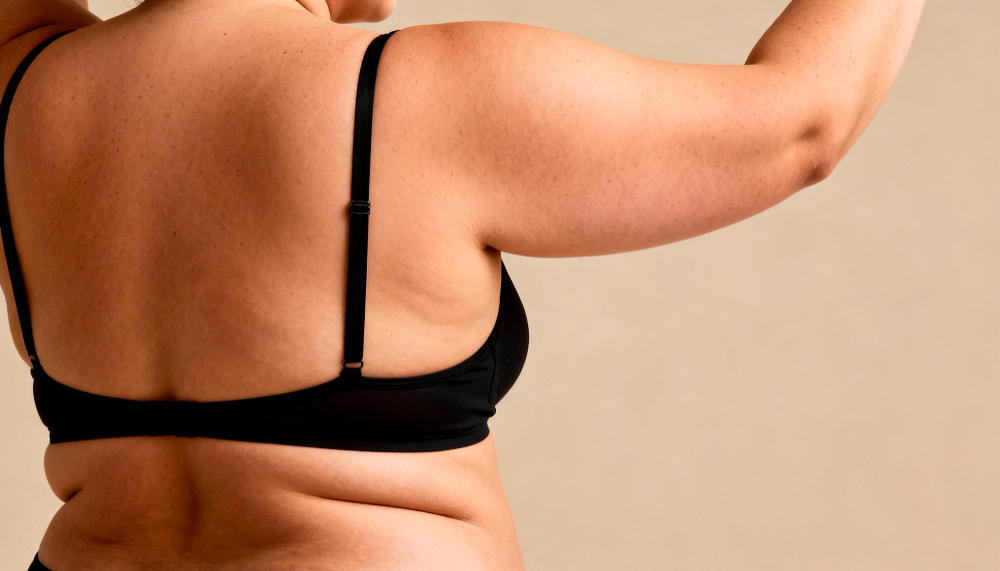
It’s important to distinguish between two very different situations, because the right treatment depends on it: mild-to-moderate skin laxity, where the skin still has some capacity to snap back, and true excess skin, where the skin has lost that capacity and hangs loose regardless of the muscle tone underneath.
| 💡 Tip — the pinch test
Pinch the skin on the inner arm between two fingers and let go. If it snaps back quickly, you likely have mild-to-moderate laxity, a good candidate for non-invasive treatments. If it hangs loosely once released (the so-called “bat wing” effect), that’s a sign you probably need surgery. This test is only a guide — a personalised assessment with Dr. Brianda is what confirms the right option for your case. |
When Radiofrequency and Morpheus8 Are Enough
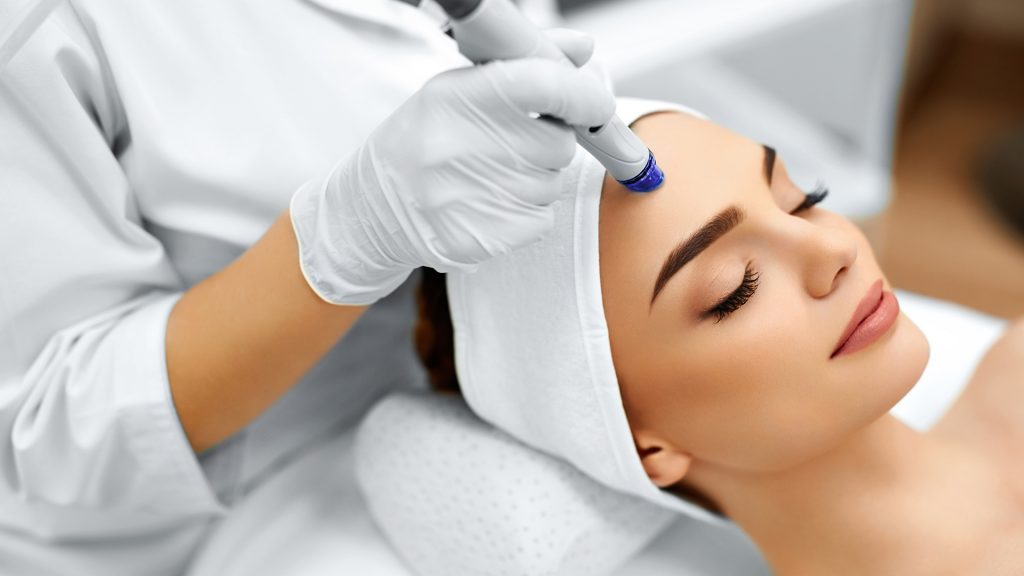
Radiofrequency and Morpheus8 are the first option when the laxity is mild to moderate and there’s no evident excess skin. Both technologies stimulate collagen and elastin production in the deeper layers of the skin, progressively improving firmness with no downtime.
Radiofrequency for the Arms
Radiofrequency applies controlled electromagnetic energy that heats the deep dermis, reactivating collagen production. It’s usually planned as a protocol of 4 to 6 sessions spaced 2-3 weeks apart, each lasting 20-30 minutes, with no anaesthesia and no recovery time needed. Results build progressively: the skin feels firmer from the first sessions, and improvement continues over the following months.
Morpheus8: When You Need Extra Firmness
When laxity is somewhat more pronounced but there’s still no real excess skin, Morpheus8 combines microneedling with fractional radiofrequency to work on deeper layers than conventional radiofrequency alone. It’s a solid middle-ground option before considering surgery, especially for patients with good skin quality but noticeable loss of tone.
When You Need a Brachioplasty (Arm Lift)
Brachioplasty stops being optional and becomes the only real solution when there’s excess skin that doesn’t respond to external stimulation, no matter how much collagen you generate. The clearest signs that you should consider surgery are:
- Visibly hanging skin on the inner arm, even with the arm fully extended.
- Significant weight loss (including after bariatric surgery) that leaves excess skin unable to retract on its own.
- No visible improvement after several sessions of radiofrequency or Morpheus8.
- Physical discomfort or difficulty with certain clothing because of the excess skin.
In these cases, brachioplasty surgically removes the excess skin (and, if needed, fat through associated liposuction) between the armpit and the elbow. It’s performed under general or loco-regional anaesthesia with sedation, and it’s aimed at patients in good health, with a stable weight and no active smoking, since both factors directly affect healing.
Radiofrequency / Morpheus8 vs. Brachioplasty: Comparison Table
| Criteria | Radiofrequency / Morpheus8 | Brachioplasty |
| Type of laxity | Mild-to-moderate, skin still snaps back | Moderate-to-severe, hanging skin that won’t retract |
| Anaesthesia | None | General or loco-regional with sedation |
| Downtime | None | 1-2 weeks of relative rest |
| No. of sessions / procedure | 4-6 sessions + maintenance | Single procedure |
| Result | Progressive firmness of existing skin | Permanent removal of excess skin |
| Scar | None | Yes, on the inner arm (fades over time) |
| Best suited if… | No evident excess skin | Visible hanging skin or significant weight loss |
What to Expect Depending on the Path You Choose
If you choose non-surgical treatments
The process is gradual: you’ll notice firmer skin after the first sessions of radiofrequency or Morpheus8, but the final result is best appreciated from the second or third month onward, once new collagen has formed. There are no activity restrictions, and treatments can be combined with other skincare routines.
If you choose surgery
The surgical process starts with an assessment consultation, followed by the standard pre-operative tests. The procedure itself typically takes 2 to 3 hours. The first week of recovery requires relative rest of the arm, with full mobility gradually returning within 3-4 weeks. The scar keeps evolving and fading over the following 12-18 months. Our complete guide to preparing for any cosmetic surgery covers what to do in the weeks before your procedure.
| ⚠️ Important
No non-surgical treatment, however advanced, can remove skin excess that has already formed. If after 3-4 sessions of radiofrequency or Morpheus8 you see no real improvement in the sagging, it’s time to consider a brachioplasty with Dr. Brianda. |
Frequently Asked Questions
Does radiofrequency remove excess skin on the arms?
No. Radiofrequency stimulates collagen and improves the firmness of existing skin, but it cannot remove skin that has already stretched. If there’s true excess skin, only brachioplasty resolves it permanently.
Is a brachioplasty painful?
Brachioplasty is performed under general or loco-regional anaesthesia with sedation, so you won’t feel pain during the procedure. There may be some discomfort in the immediate post-op period, managed with the pain relief prescribed by your medical team.
What kind of scar does an arm lift leave?
The scar runs along the inner arm, from the armpit area toward the elbow, and its length depends on how much skin needs to be removed. It’s a scar that evolves over time, gradually fading during the first 12-18 months.
Can I combine radiofrequency with a brachioplasty?
Yes. It’s common to use radiofrequency or Morpheus8 several months after surgery as maintenance, to preserve skin firmness in the long term.
At what age is each option recommended?
There’s no fixed age: it depends on skin quality and the degree of laxity, not just the number of years. That’s why a personalised assessment in consultation is the essential first step before choosing between a non-invasive treatment and surgery.
Conclusion
Choosing between radiofrequency, Morpheus8 or a brachioplasty isn’t a decision you should make on your own. Dr. Brianda assesses the real condition of your skin, the degree of laxity and your goals during consultation, to recommend the option that will actually give you the result you’re looking for, without unnecessary steps.
| 📌 Book Your Assessment Consultation
At your first consultation we’ll assess your case and let you know clearly whether your skin responds to non-invasive treatments or whether brachioplasty is the best option for you. Call us at +34 638 327 138 or visit us at our Málaga and Marbella clinics. |